
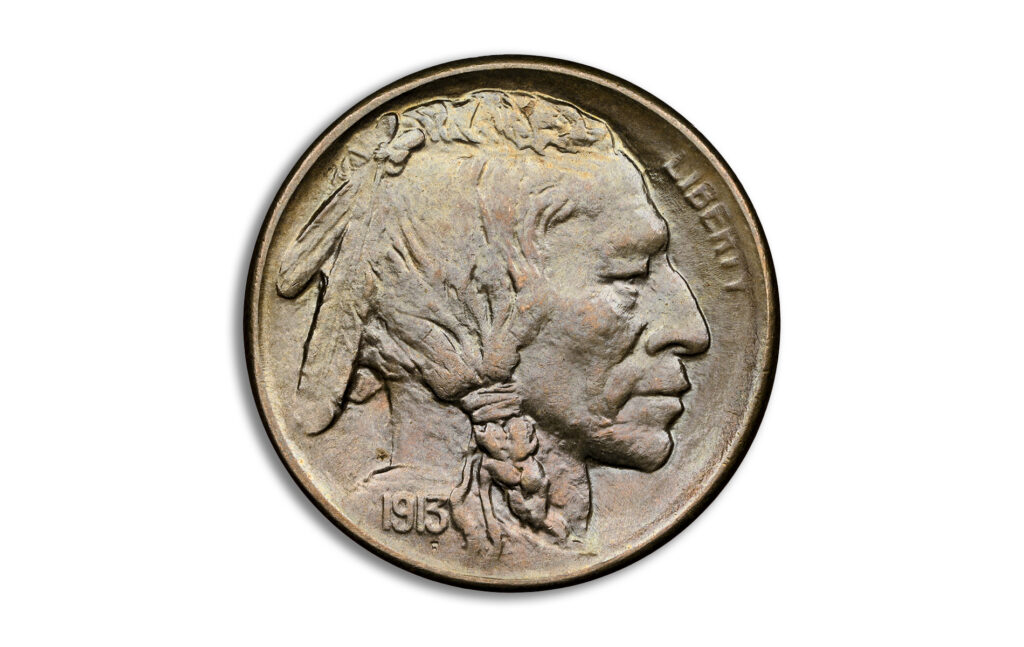
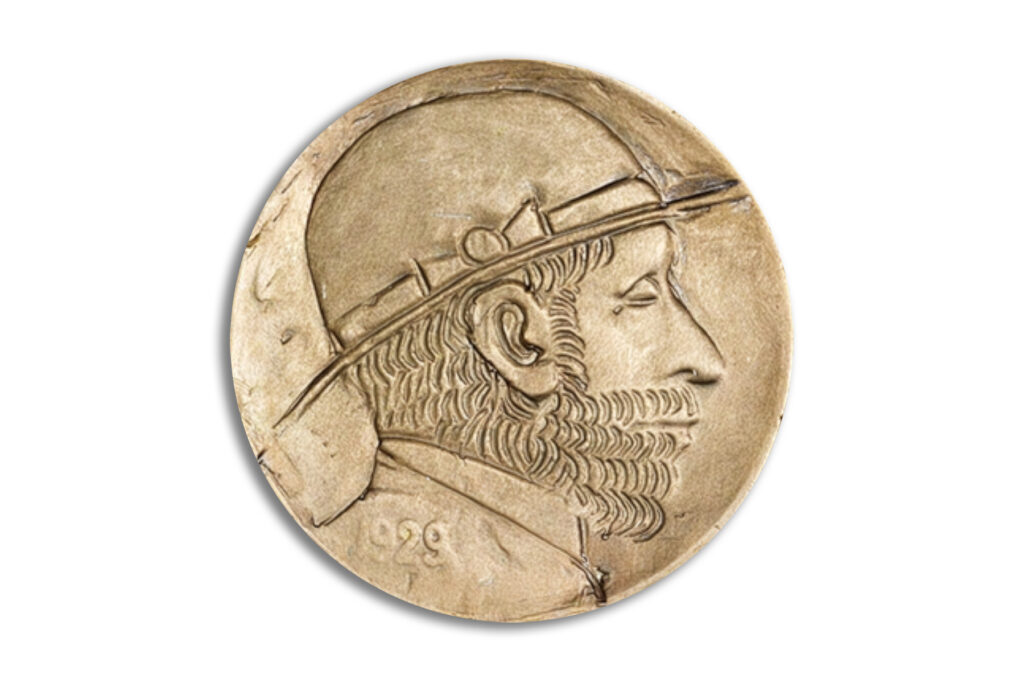
Hobo nickels are a fascinating piece of American folk art. While people have been altering coins for centuries, hobo nickels became popular in the early 20th century. Modifying these coins became a popular pastime for hobos and transient workers during the great depression, while travelling on the railways or waiting for work. Doing so also provided an opportunity to increase the value of these coins, often allowing the artist to exchange their beautifully carved nickel for a hot meal or a night’s lodging. The relatively soft 75% copper and 25% nickel composition, the large high relief and the low face value of the Buffalo Nickel made it the perfect canvas. It could be carved using easily accessible tools such as pocket knives, sewing needles, or nails. At the height of its popularity, producing hobo coins was dominated by legendary carvers such as Bertram “Bert” Wiegand and his incredibly prolific student, George Washington “Bo” Hughes. Bo is widely considered the master of the craft, producing thousands of pieces.
The Buffalo Nickel was designed by sculptor James Earle Fraser and was minted between 1913 and 1938. Fraser grew up in South Dakota where he witnessed the tail end of the American frontier. When the U.S. Mint asked him to redesign the five-cent piece, he wanted to draw on his own experiences for inspiration. He stated that he wanted to design something
“Totally American—a coin that could not be mistaken for any other country’s coin”.
The profile on the obverse is a composite of three different Native American leaders.Chief Iron Tail of the Lakota Sioux. Chief Iron tail was an Oglala Lakota Chief and a star performer with Buffalo Bill’s Wild West. Chief Two Moons was one of the Cheyenne chiefs who took part in several battles against the United States Army including the battle of little bighorn. Chief Big Tree was a prominent Kiowa war chief known for his role in Native American resistance against U.S. expansion during the late 19th century. By blending their features, Fraser created an archetype that represented the dignity and strength of many nations rather than a single individual.
On the reverse is a massive American Bison, not a Buffalo. The model for the coin was reportedly Black Diamond, a 1,550-pound bison residing at the Central Park Zoo. Fraser had to have an assistant distract the massive animal with grain just so he could get a profile sketch without the bison turning to face him.
Apparently, this beautiful design was a nightmare for the Mint. Because the design was so high-relief, the date and the words five cents, the highest points on the coin, wore off almost immediately in circulation and there were also endless complaints that these new nickels would jam coin operated machines.
The Buffalo Nickel was eventually replaced by the Jefferson Nickel in 1938, but its legacy never faded. In 2006, the U.S. Mint revived Fraser’s design for the American Buffalo Gold Coin.